MODEL SIGNAL / MODEL COMPARISON
Model Signal
Choose a task. Compare the models. See where the numbers came from.
Open Model Signal ↗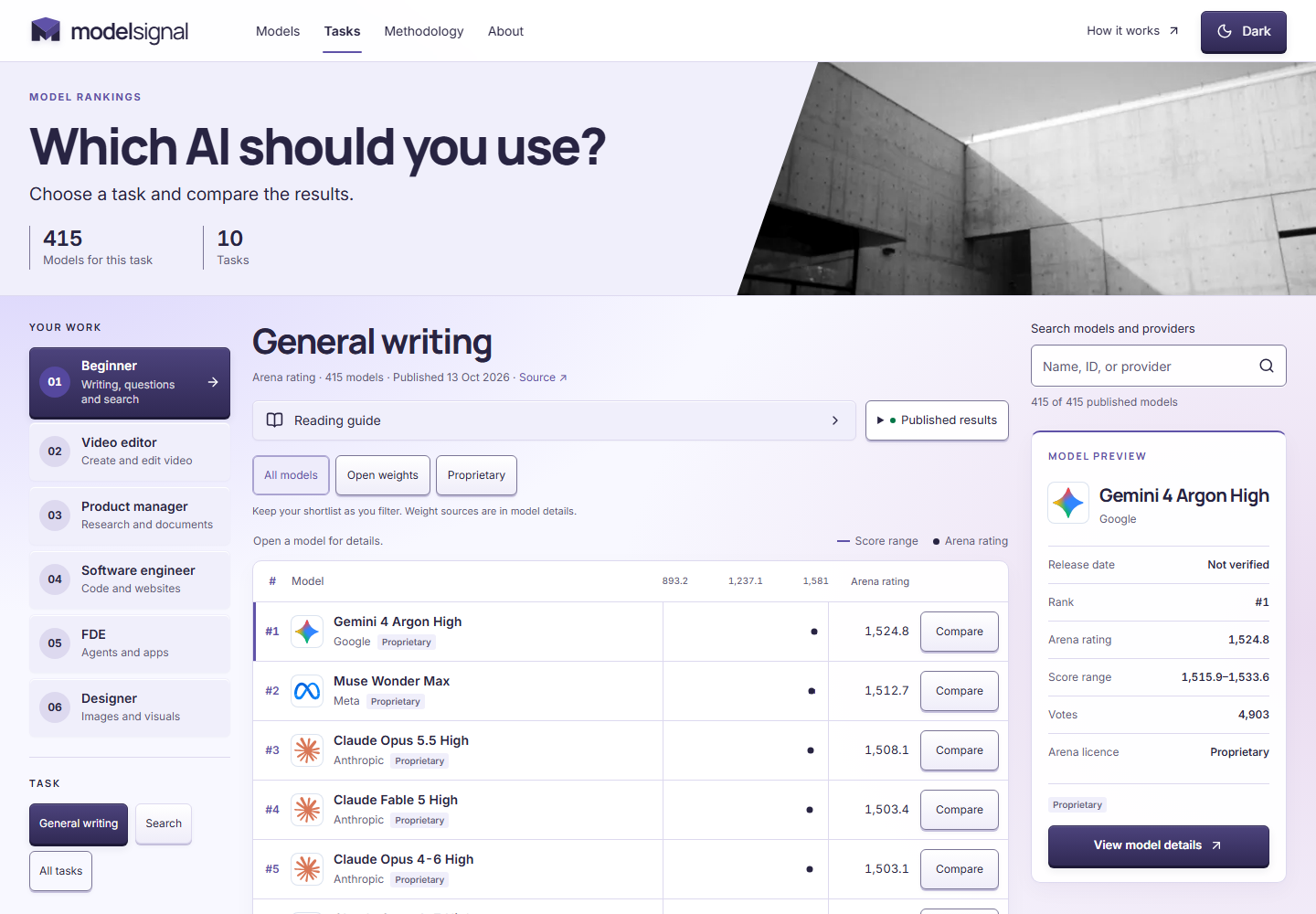
I wanted to compare models for the task I actually had.
I wanted a clearer way to compare models for the work I was doing. A writing score does not answer a coding question, and a ranking is hard to judge without its source. Model Signal puts the task first and keeps the evidence beside the result.
You can compare three models and check where their scores came from.
Choose a task, filter by model or provider and shortlist up to three models. The comparison keeps published values, score ranges and source links together. A separate library shows public-weight information and benchmark archives.
I update the data once a day and keep the original source dates.
I collect the comparison data once a day using n8n, which runs the scheduled updates. The site reads a saved copy of that data. That means visitors can browse and reload the comparisons without starting a new collection or paying for a model call.
Input validation protects the last good publication when an update is malformed. The interface retains each source’s dates and units, so an older benchmark does not look like a newly run test.
IMPLEMENTATION
How I built the comparison and its daily updates.
The comparison
Astro serves the page; React and TypeScript handle filters, shortlists and comparison states. Published results come from Arena, HELM and EvalPlus, with model metadata from Hugging Face.
 Astro
 React
 TypeScript
- n8n
 Cloudflare KV
- Zod
- n8n
- Scheduled collection and publication.
- Zod
- Validation of incoming datasets.
- Cloudflare KV
- Saved publications and a bundled fallback for browsing.
- Vitest / Playwright
- Data checks, interaction tests and responsive layout checks.